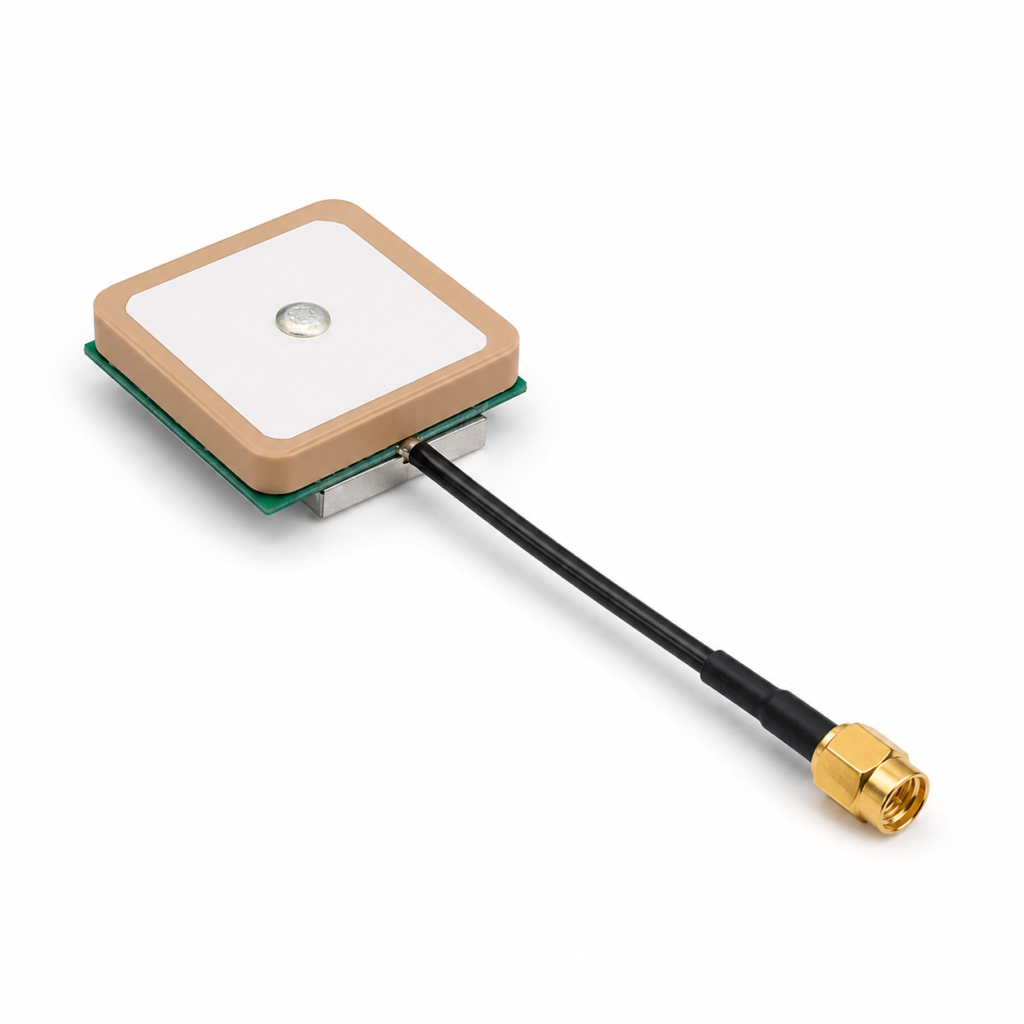
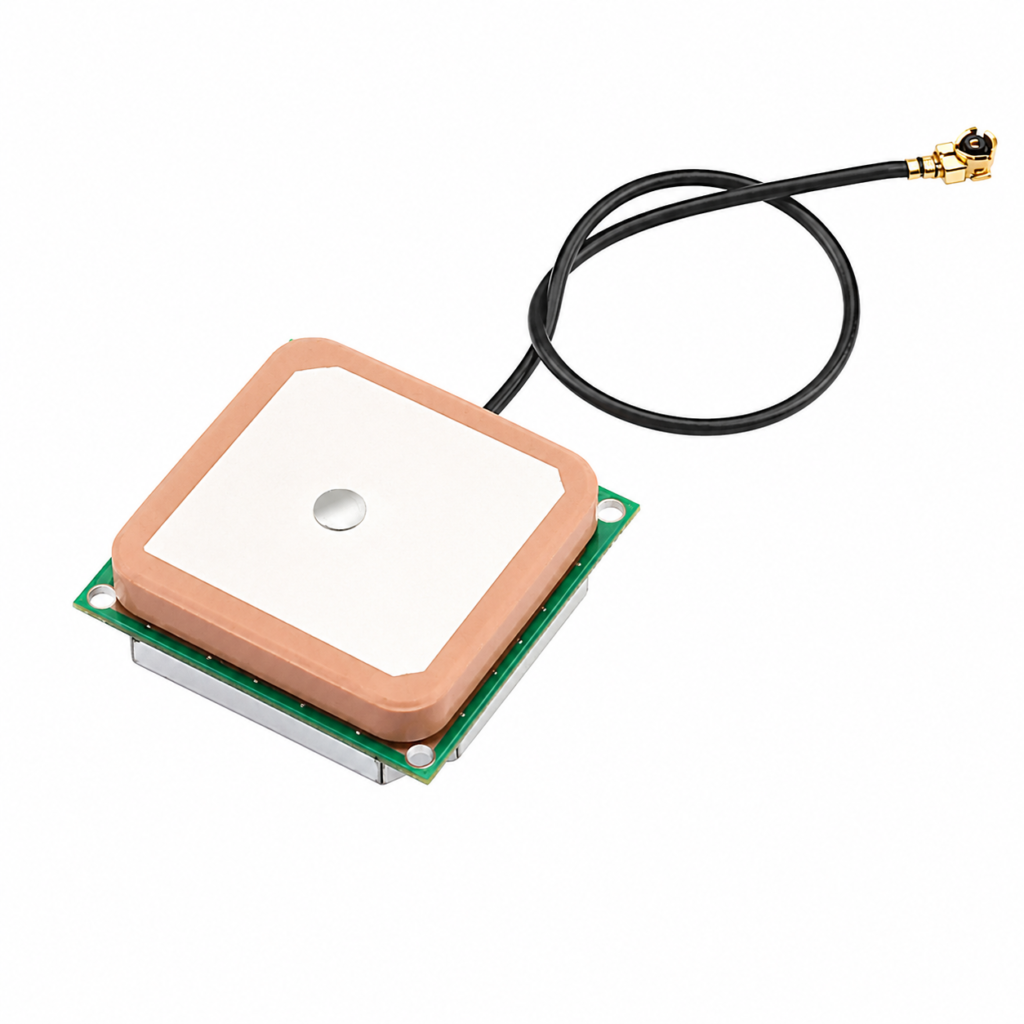
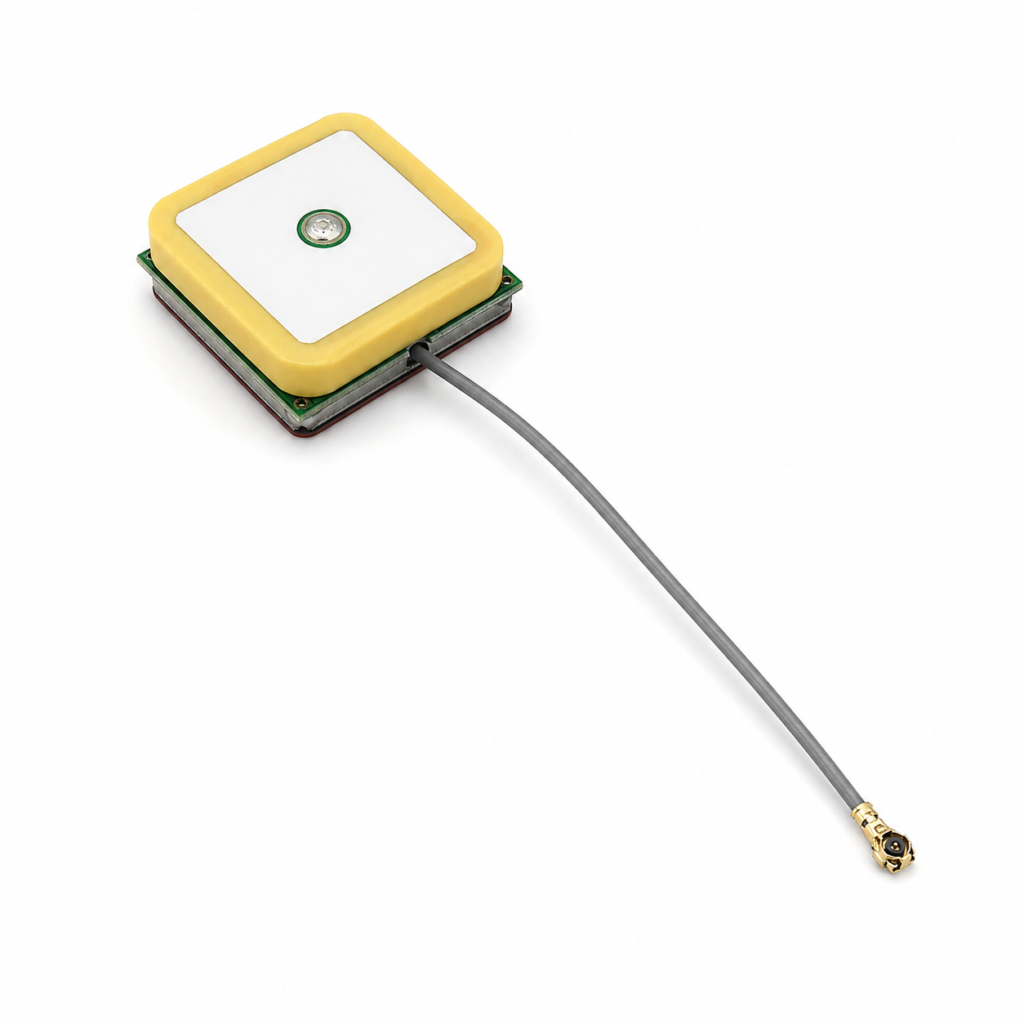
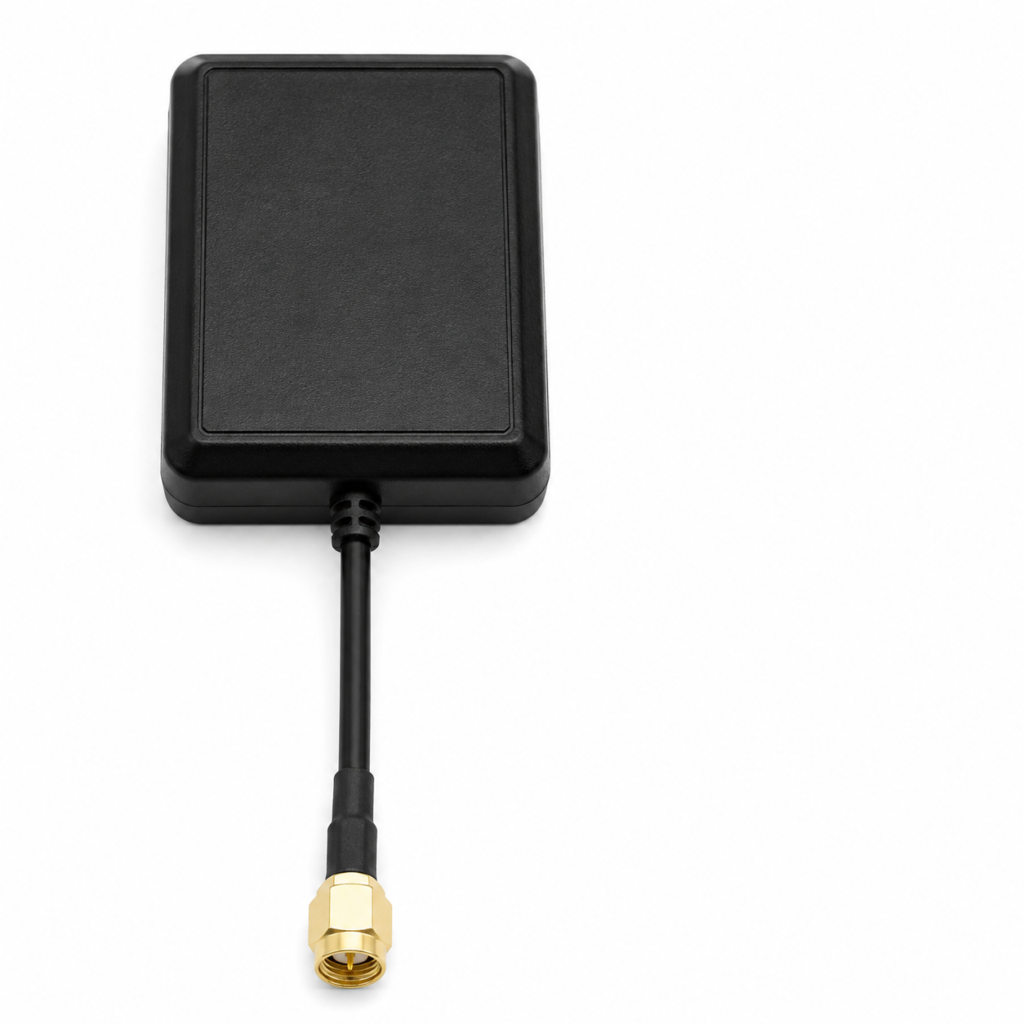
 Click to Zoom
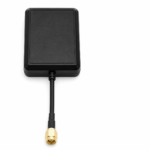
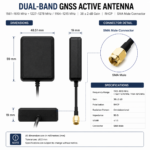
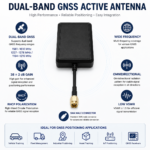
Dual-Band GNSS Active Antenna with SMA Male Connector
External GNSS reference configuration
| Band selection | 1561–1610 MHz reference, with 1227–1278 MHz or 1164–1215 MHz second-band option. Confirm exact signals and selected combination. |
| Active RF stage | Supply voltage, current, LNA gain, noise figure and filtering agreed with receiver requirements. |
| Radiator performance | Confirm gain, polarization, pattern and matching by band with measurement conditions; distinguish radiator and amplifier gain. |
| RF interface | 50 Ω / SMA male reference. Confirm the exact mating interface and receiver compatibility. |
| Housing reference | 59 × 48.51 × 19 mm; black reference housing. Final construction and dimensions follow the approved drawing. |
| Cable and mounting | Specify cable type, length, exit direction and mounting method for project review. |
| Environment | Specify temperature, moisture, sealing and vibration requirements. Ratings require configuration-specific confirmation. |
Reference options do not establish identical performance across configurations. Request the confirmed datasheet for your selected design.
Custom configurations available. Product images and listed parameters describe reference configurations. Share your required bands, RF targets, dimensions and installation requirements. Final specifications are confirmed for your agreed configuration.
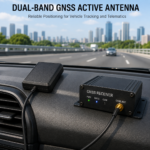
This external dual-band GNSS active antenna presents a compact housing and SMA male reference interface for receiver, tracking and navigation projects. Nova Antenna can review band, cable, connector and mechanical changes for your application. Final specifications apply to the agreed configuration.
Choose the GNSS signals your receiver needs
The reference frequency information lists 1561–1610 MHz with a second-band option of 1227–1278 MHz or 1164–1215 MHz. Specify the receiver model and exact signals required. The second-band alternatives must be confirmed for the selected design; this page does not establish simultaneous coverage of every listed range.
Match the active RF stage to the receiver
Confirm receiver antenna bias voltage, available current, permitted input level and antenna detection requirements. Request separate figures for radiator gain, LNA gain, noise figure and filtering, with measurement conditions. Cable loss and the receiver RF path are reviewed together. An unqualified gain value does not describe the antenna radiation pattern or guarantee positioning accuracy.
Configure the enclosure and installation
The reference housing is 59 × 48.51 × 19 mm in black with an SMA male interface. Discuss mounting, cable exit, cable length, mating connector and available space. Specify temperature, moisture, vibration and sealing requirements for feasibility review. No environmental rating is implied without an agreed specification.
Validate reception in the target system
Agree installed antenna orientation, sky visibility and clearance from nearby metal and electronics. Evaluate reception with the intended receiver and installation. If the project requires RTK, include the receiver, correction source and system acceptance criteria; a dual-band antenna alone does not guarantee an RTK fix or positioning accuracy.
Request a custom external GNSS antenna quote
Send your receiver model, required signals, active-stage requirements, housing drawing, cable and connector details, environment, validation targets and quantity through our contact page. For an embedded ceramic design, see our GPS + BeiDou ceramic antenna options; project development is available through custom RF design.